What the Light Actually Means
By law, the tire pressure monitoring system (TPMS) warning triggers when any tire drops 25% below the recommended pressure. For a typical car spec'd at 32 PSI, the light comes on around 24 PSI. That's low enough to hurt handling, fuel economy, and tire life — plus drive at highway speed on an under-inflated tire long enough and you can overheat the sidewall and fail it. The light staying solid means it's currently low. A blinking light that then stays solid = a sensor failure, not a pressure issue.
First Check: Is It Actually Cold Weather?
Air contracts when it's cold. A 30°F drop overnight can reduce tire pressure by 3-4 PSI. If your light comes on after the first cold snap in fall/winter and goes away after a few miles of highway driving (the tires warm up, pressure rises), this is the cause. Add air to bring them back to spec. Cleveland-specific tip: check pressure every 3-4 weeks in winter, once a month the rest of the year.
Need tires & wheels? Read the rest later.
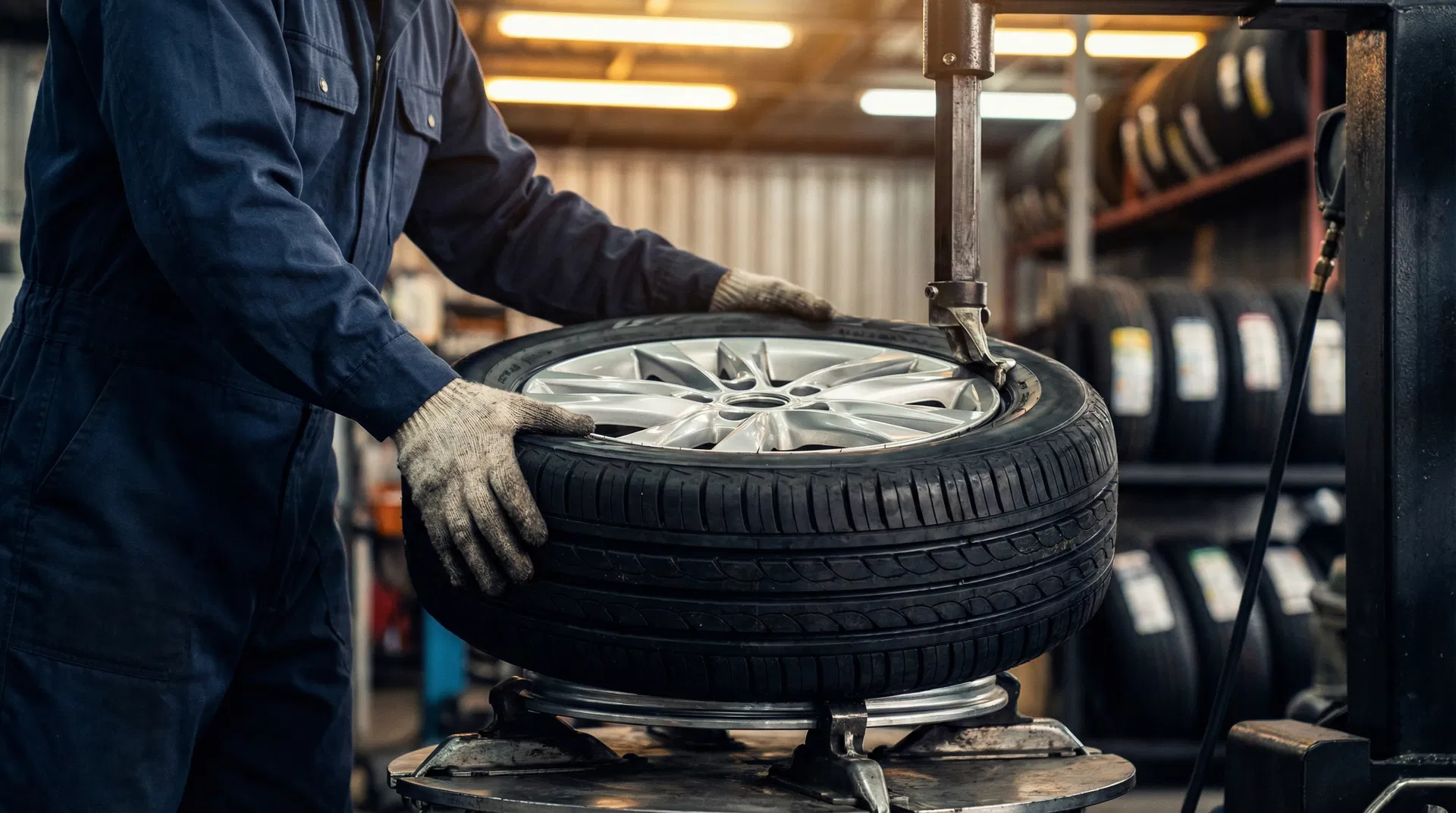
Free mount + balance + valve stems. Used tires from $25 installed (12-inch rims, subject to availability; most sizes $40-80 installed). Walk-ins welcome.
How to Check Pressure Yourself
You need a tire pressure gauge ($5-$15 at any auto parts store). The proper pressure is on a sticker inside the driver-side door frame — NOT on the sidewall of the tire (that's the maximum pressure, not the recommended). Check when the tires are cold (before driving, or at least 3 hours after). Unscrew the valve cap, press the gauge firmly, read the number. If it's below spec, add air at any gas station ($1-$2) or free at many places. Don't over-inflate — over-pressure causes center-wear and rough ride.
If It's Not Temperature — Finding the Leak
Look at each tire visually — is one obviously flatter than the others? That's your culprit. Check for visible damage: nails, screws, sidewall cuts, valve-stem damage. If you can't see anything, spray soapy water around the tread — bubbles show where air is escaping. A slow leak (10-15 PSI/week) is usually a small puncture; we can plug/patch from the inside for $25-$35. A fast leak means bigger damage, possibly sidewall — often requires replacement.
The TPMS Sensor Itself Might Be Dead
TPMS sensors live inside each wheel and run on a small battery that lasts 5-10 years. If your car is 7+ years old and you get a TPMS light with CORRECT pressure readings on all four tires, a sensor is probably dead. Cost: $60-$120 per sensor installed. Usually just replace the failed one, unless multiple are dead and you want to do them all together. After replacement we have to 'train' the car to recognize the new sensor (called TPMS relearn) — takes 10 minutes.
Is It Safe to Drive?
Short distance at low speed (under 5 miles to a gas station or tire shop)? Yes, as long as pressure is still above 20 PSI and the tire isn't visibly flat. Highway driving with the light on? NO — under-inflation at 65+ mph can overheat and cause blowout. Come in to Nick's Tire & Auto for a free TPMS diagnosis at 17625 Euclid Ave, Cleveland OH. Flat repair $25-$35, sensor replacement $60-$120, everything while you wait. (216) 862-0005. Related: /tires, /tire-shop-near-me.
Read the full pillar
The Complete Cleveland Tire Guide
Sidewall numbers, used vs new math, free-services traps, and the Cleveland pothole reality — the full 2,500-word pillar.
Read the full guideRELATED SERVICES
Bring it in. We'll show you the problem before we fix it.
Free mount + balance + valve stems. Used tires from $25 installed (12-inch rims, subject to availability; most sizes $40-80 installed). Walk-ins welcome. Free Uber within 5 miles if you drop off. Walk-ins welcome 7 days a week.
- 12-mo parts / 90-day labor warranty
- Payment programs from 4 providers
- Most repairs same/next day
- Text updates throughout