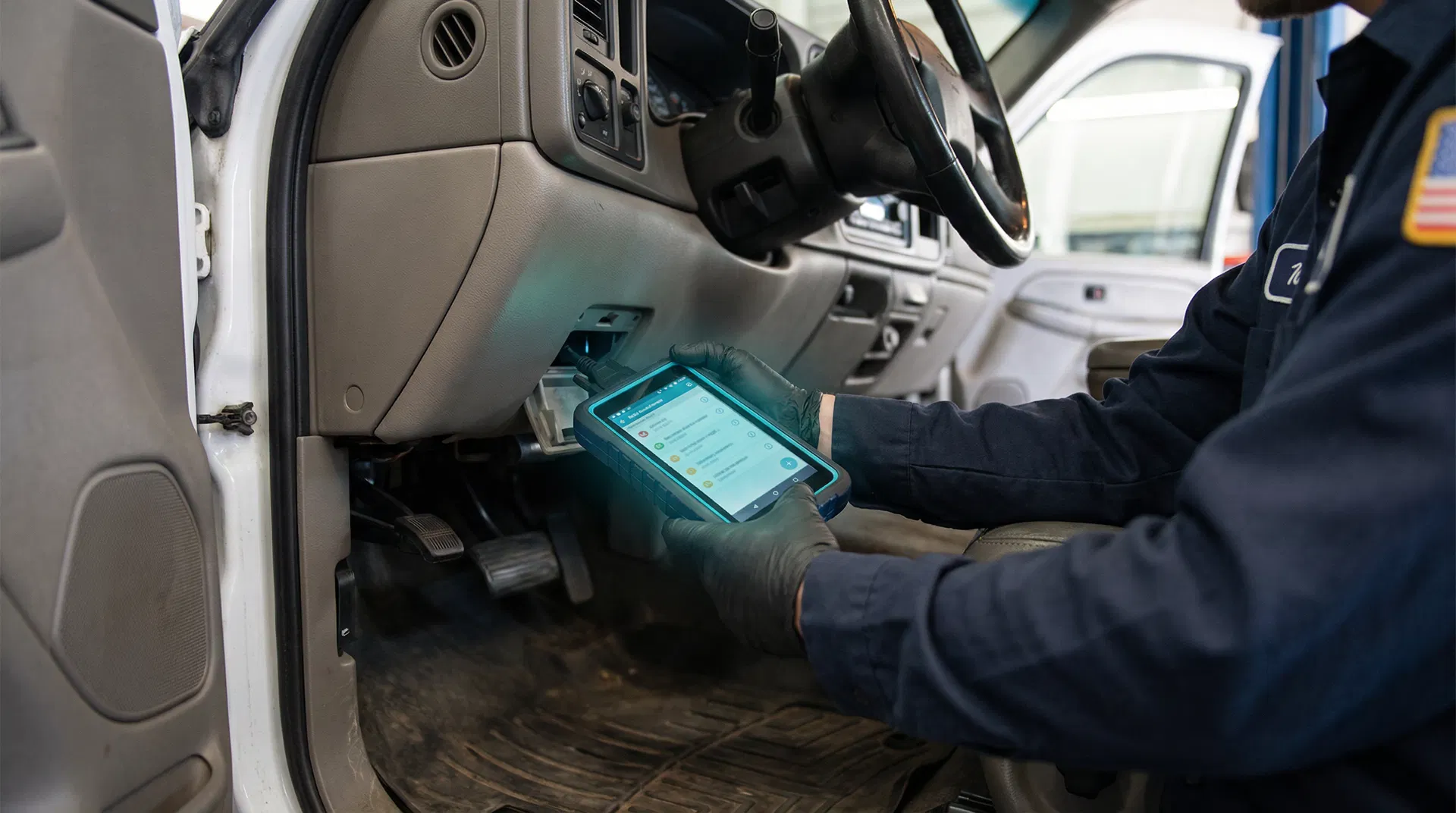
Engine Misfires — The Most Common Cause
A misfire means one or more cylinders are not firing properly. Every time a cylinder misfires, the engine loses its smooth rhythm and you feel a shake or shudder. At idle, when engine speed is low, misfires are more noticeable because there is less rotational momentum to smooth things out. Causes of misfires include worn spark plugs — the most common and cheapest fix. Failing ignition coils — extremely common on vehicles over 80,000 miles. Fuel injector problems — a clogged or leaking injector. Compression loss — a more serious issue involving valves or piston rings. The check engine light will usually be on with misfire codes — P0300 through P0308 — telling you which cylinder is affected. If the light is flashing, the misfire is severe and you should not drive the car.
Vacuum Leaks
Your engine relies on a precise amount of air entering through the intake system. A vacuum leak lets unmetered air sneak in through a cracked hose, loose clamp, failed gasket, or cracked intake manifold. This extra air leans out the fuel mixture and causes rough idle, surging, and sometimes stalling. In Cleveland, vacuum leaks are especially common on vehicles 8 years and older because the rubber hoses and plastic intake components become brittle from years of temperature extremes — going from negative 10 in January to 90 degrees in July cracks rubber and warps plastic. A vacuum leak often creates a hissing sound that you can hear with the hood open. Our technicians use smoke machines to find vacuum leaks — we pump smoke into the intake system and watch where it escapes.
Need check engine light? Read the rest later.
Free OBD-II code scan. $49 full diagnostic, waived if you do the repair with us. We test before we replace.
Dirty Throttle Body
The throttle body controls how much air enters the engine. Over time, carbon deposits build up on the throttle plate and bore, restricting airflow at idle. The engine computer tries to compensate by adjusting the idle air control, but eventually the deposits get bad enough that the idle becomes rough or erratic. You might notice the car idling too low, surging between high and low RPM, or stalling when you come to a stop. Throttle body cleaning is one of the simplest and most effective fixes for rough idle — it takes about 30 minutes and costs far less than replacing parts. We clean throttle bodies as part of our check process when carbon buildup is the issue.
Engine and Transmission Mounts
Engine mounts and transmission mounts are rubber-filled brackets that hold the powertrain in place while absorbing vibration. When the rubber deteriorates — from age, heat, and Cleveland temperature cycling — the mount loses its ability to dampen vibration. The engine's normal running vibration transfers directly into the vehicle body, creating a shake you feel through the steering wheel, seats, and floor. Bad mounts also allow the engine to move excessively, which can cause a clunk when shifting into drive or reverse, or a thud when accelerating from a stop. Mounts typically fail between 80,000 and 150,000 miles. On vehicles that have lived through Cleveland winters, the rubber deteriorates faster from the constant freeze-thaw cycle.
Diagnose It Right at Nick's
A shaking car at idle has multiple possible causes, and the right answer saves you from wasting money on wrong guesses. Our $49 code scan + live data checks for misfire codes and live engine data, tests for vacuum leaks with a smoke machine, inspects the throttle body for carbon buildup, evaluates engine and transmission mount condition, and checks all related sensors and systems. We find the actual problem and give you a clear repair estimate before any work starts. Most rough idle causes are fixable for a few hundred dollars or less. Come to Nick's Tire and Auto at 17625 Euclid Ave, Cleveland or call (216) 862-0005. We do [diagnostics](/diagnostics), [general repair](/general-repair), [brakes](/brakes), and [tires](/tires) — all under one roof, 7 days a week.
Read the full pillar
The Cleveland Auto Repair Owner's Manual
Check engine light, transmission fluid vs gearbox, battery vs alternator — the check-vs-parts-cannon distinction.
Read the full guideRELATED SERVICES
Bring it in. We'll show you the problem before we fix it.
Free OBD-II code scan. $49 full diagnostic, waived if you do the repair with us. We test before we replace. Free Uber within 5 miles if you drop off. Walk-ins welcome 7 days a week.
- 12-mo parts / 90-day labor warranty
- Payment programs from 4 providers
- Most repairs same/next day
- Text updates throughout