Why the Check Engine Light Comes On
Your vehicle's onboard computer monitors dozens of sensors and systems. When it detects a reading outside normal parameters, it stores a diagnostic trouble code (DTC) and turns on the check engine light. The light itself does not tell you what is wrong — it only tells you that something needs attention. That is why proper check matters.
Oxygen Sensor Failure
Oxygen sensors measure the amount of unburned oxygen in your exhaust. When they fail, the engine computer cannot properly adjust the fuel mixture. This leads to reduced fuel economy, higher emissions, and can eventually damage the catalytic converter. Most vehicles have 2-4 oxygen sensors, and they wear out over time.
Need check engine light? Read the rest later.
Free OBD-II code scan. $49 full diagnostic, waived if you do the repair with us. We test before we replace.
Loose or Damaged Gas Cap
A loose, cracked, or missing gas cap can trigger the check engine light because it allows fuel vapors to escape from the fuel system. This is the simplest and cheapest fix — but you still need a code scan to confirm it is the actual cause and not something more serious.
Catalytic Converter Problems
The catalytic converter reduces harmful emissions by converting exhaust gases into less harmful compounds. When it fails, you will notice reduced engine performance, poor fuel economy, and your vehicle will not pass an Ohio E-Check. Catalytic converter problems are often caused by other issues — like a failing oxygen sensor — that were not addressed in time.
EVAP System Leaks
The evaporative emission control (EVAP) system prevents fuel vapors from escaping into the atmosphere. Small leaks in hoses, valves, or the charcoal canister can trigger a check engine light. These leaks are common and usually not urgent, but they will cause an E-Check failure if left unrepaired.
Mass Airflow Sensor Issues
The mass airflow (MAF) sensor measures the amount of air entering the engine. A dirty or failing MAF sensor causes rough idling, hesitation during acceleration, and reduced fuel economy. In many cases, cleaning the sensor solves the problem without needing a replacement.
How We Diagnose at Nick's Tire & Auto
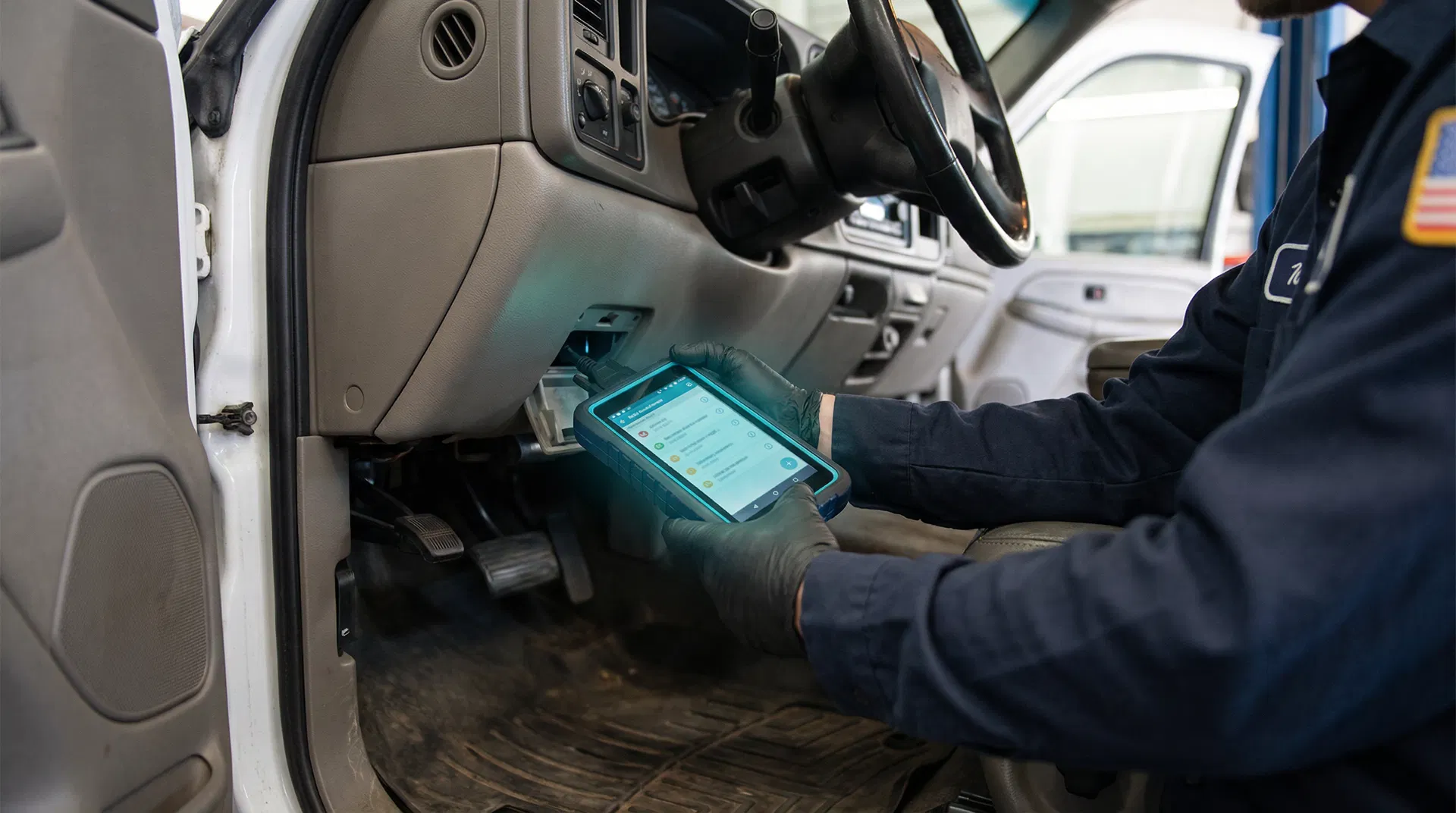
We use OBD-II + live data scanners to read the specific trouble codes stored in your vehicle's computer. But we do not just read codes and replace parts — we perform a complete diagnosis to find the root cause. A code tells us where to look, not what to replace. This approach saves you money by fixing the actual problem the first time. Serving Cleveland, Euclid, and Northeast Ohio.
Read the full pillar
The Cleveland Auto Repair Owner's Manual
Check engine light, transmission fluid vs gearbox, battery vs alternator — the check-vs-parts-cannon distinction.
Read the full guideRELATED SERVICES
Bring it in. We'll show you the problem before we fix it.
Free OBD-II code scan. $49 full diagnostic, waived if you do the repair with us. We test before we replace. Free Uber within 5 miles if you drop off. Walk-ins welcome 7 days a week.
- 12-mo parts / 90-day labor warranty
- Payment programs from 4 providers
- Most repairs same/next day
- Text updates throughout