HOW LONG SHOULD BRAKES LAST IN CLEVELAND? (HONEST ANSWER, REAL NUMBERS)
Brake life isn't a fixed number — it ranges from 25,000 to 70,000 miles depending on driving style, car weight, and Cleveland road conditions. Here's what actually matters and how to tell when yours need replacing.
The Short Answer
Most cars get between 30,000 and 60,000 miles on a set of brake pads under normal driving. City commuters often see 25,000-40,000. Highway-heavy drivers can stretch to 50,000-70,000. Cleveland roads are harder on brakes than average — cold starts, salt corrosion, and the potholes force more aggressive stopping. Plan on inspection every 15,000 miles to avoid being caught off guard.
What Actually Kills Your Brakes Faster
Driving style matters most. Habitual late, hard braking wears pads 2-3x faster than steady, predictive stopping. Riding the brake on downhills (instead of downshifting or engine-braking) overheats the pad material. Heavy vehicles (SUVs, pickup trucks) chew through pads faster because they need more force to stop. Cleveland-specific accelerators: winter road salt corroding caliper slides, stop-and-go I-90 traffic, short trips where brakes never reach optimal temperature (leads to glazing). Electric vehicles stretch pad life to 80,000+ miles because regenerative braking does most of the work — but their rotors can rust from underuse (a different problem).
Need brake service? Read the rest later.
Free brake check. Pads from $149/axle. Pictures of worn parts before any replacement.
Rotors Don't Last Forever Either
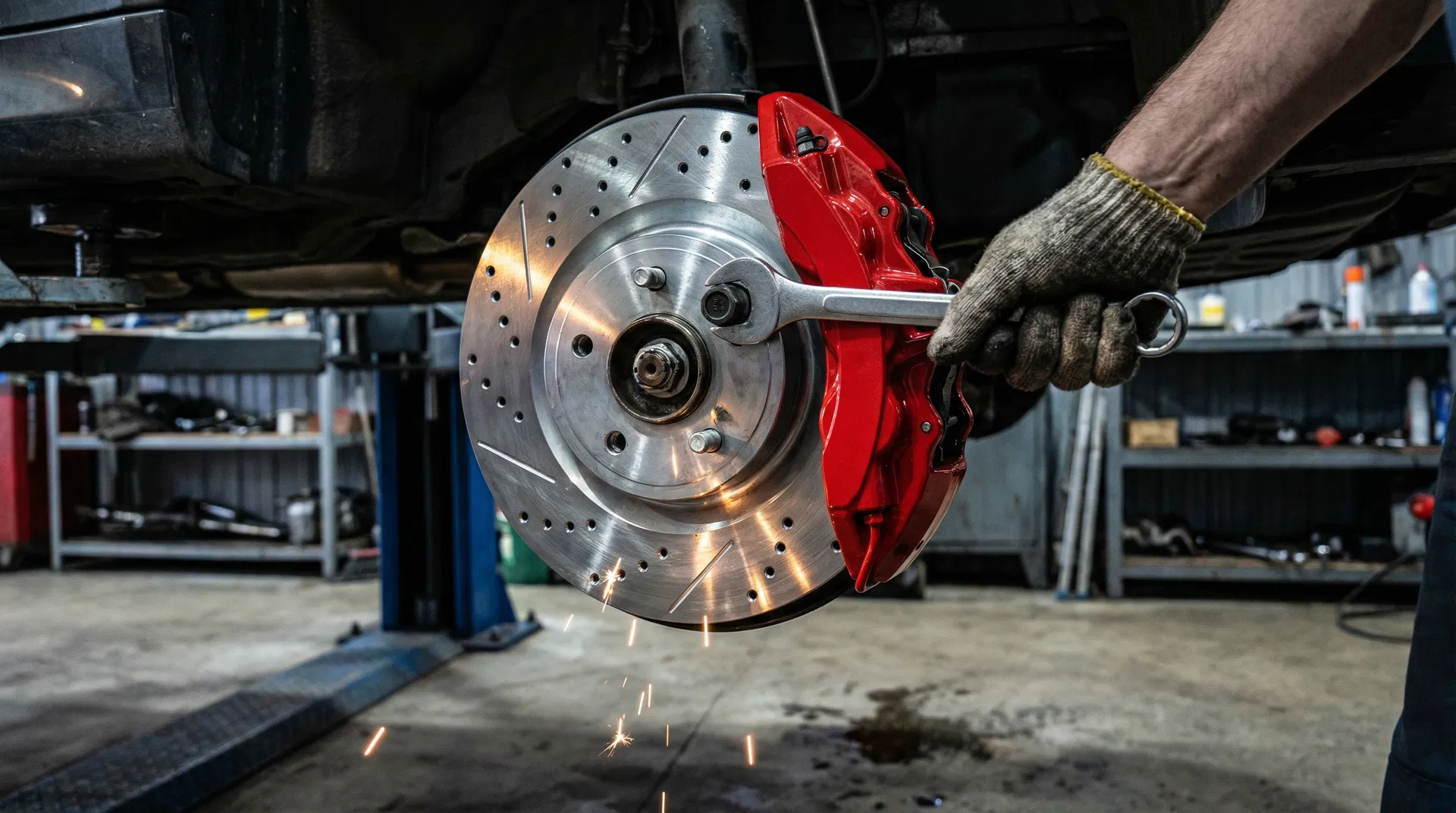
Rotors usually make it through 2-3 pad changes if they're good quality. At each pad replacement we measure rotor thickness vs manufacturer minimum. If the rotor is below spec OR has deep grooves from a previously-worn-through pad, we replace them. Cleveland salt is rough on rotors — pitting and rust grooves show up faster than in dry climates. Pads + rotors together runs $329-$429 per axle at Nick's vs $149-$199 for pads alone.
Signs You're Getting Close
Squealing when you apply brake pressure — pad wear indicators are designed to shriek at about 3mm pad thickness (new pads are 10-12mm). Longer stopping distance or 'soft' pedal feel — could mean pads thin enough that caliper piston is over-extended. Brake dust caked on one wheel but not the other — sticky caliper dragging the pad, wears it out 4x faster. Vibration through the steering wheel when braking from highway speed — rotor warping, usually from overheating. Visible pad thickness under 3mm (you can see through the wheel spokes). Any of these = come in for a free inspection. Waiting until grinding = pad is zero, now you're cutting the rotor and costs jump.
How to Extend Brake Life
Look further ahead and brake gently — you can save 30-40% on wear just from predictive driving. Don't ride the pedal on downhills (use lower gear instead). Address alignment issues promptly — a pulling car chews the inside edge of one pad. Rinse your car off in winter to get salt off the underside (brakes included). Rotate tires on schedule — uneven tire wear puts uneven load on brakes. Get brakes inspected every oil change at Nick's — we do it free, and catching thin pads early means you replace pads only ($149) instead of pads + rotors ($329).
Get Your Brakes Checked
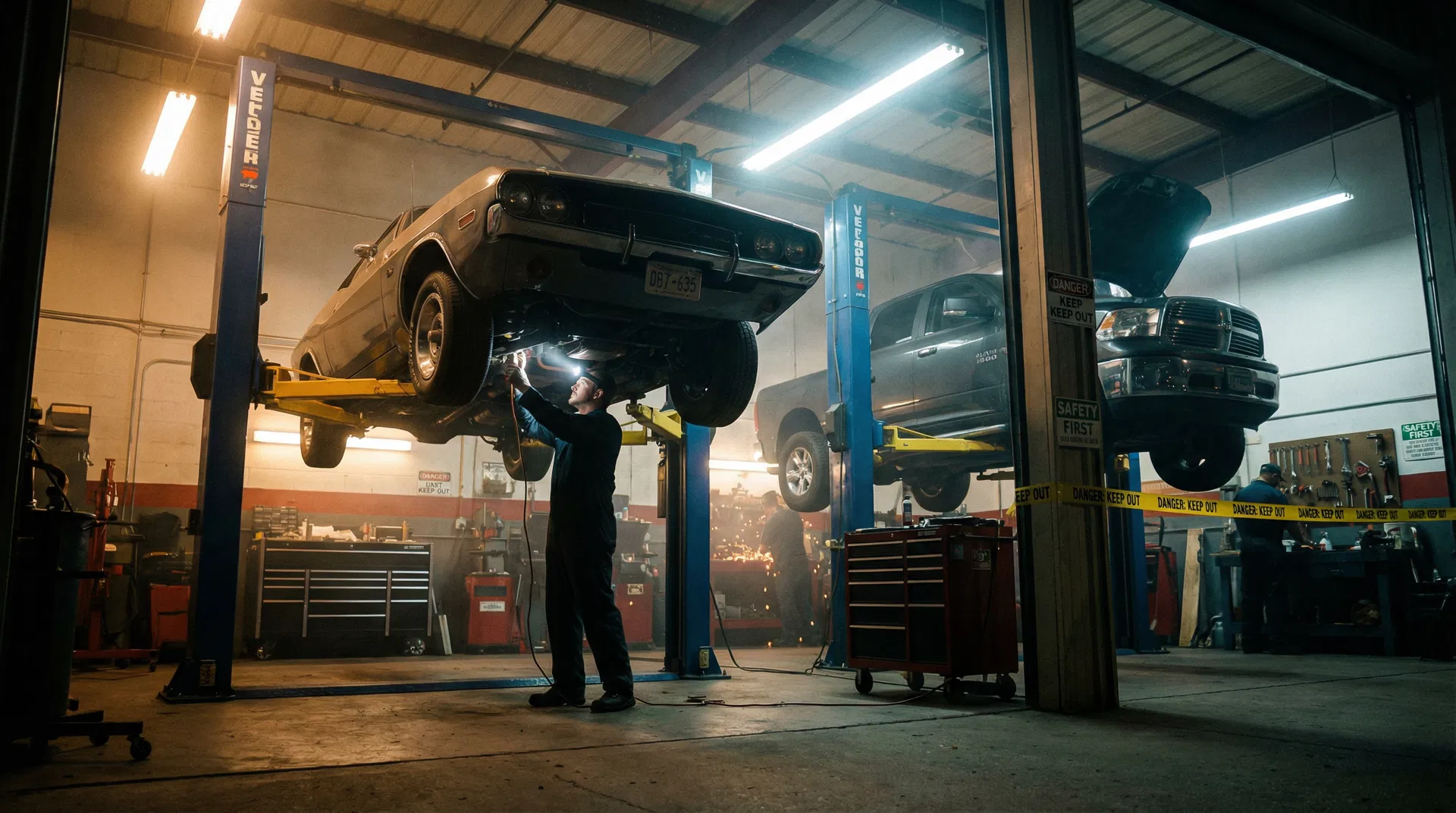
Walk in any day at Nick's Tire & Auto, 17625 Euclid Ave, Cleveland OH. Free inspection — no obligation, no fear-tactics. We measure actual pad thickness and rotor wear, show you the numbers, and give you a real estimate only if service is needed. Most brake jobs done same-day. Call (216) 862-0005 or book online. We show you the problem before we fix it.
RELATED SERVICES
Bring it in. We'll show you the problem before we fix it.
Free brake check. Pads from $149/axle. Pictures of worn parts before any replacement. Free Uber within 5 miles if you drop off. Walk-ins welcome 7 days a week.
- 12-mo parts / 90-day labor warranty
- Payment programs from 4 providers
- Most repairs same/next day
- Text updates throughout